
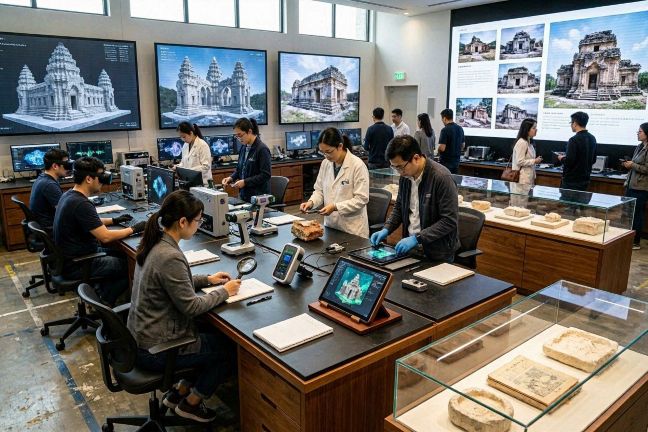
Armed conflicts have damaged or destroyed thousands of cultural sites over the past decade, prompting museums, artists, and technology experts to rethink how history can be documented and shared. As geopolitical tensions threaten monuments, museums, and archaeological treasures, digital creativity is becoming an important tool for protecting cultural identity. Advances in artificial intelligence, 3D scanning, and immersive exhibitions are helping preserve the stories behind endangered landmarks before they are lost.
The growing importance of digital heritage preservation reflects this shift. Research from UNESCO shows that conflicts in regions such as Ukraine, the Middle East, and parts of Africa have placed hundreds of cultural properties at risk. In response, artists and heritage organizations are transforming historical records into interactive digital experiences that can survive beyond physical destruction and remain accessible to future generations.
Conflict Creates Urgency for Digital Documentation
Historic buildings and archaeological sites often become unintended victims of war. Damage can erase centuries of architecture, craftsmanship, and cultural memory within days. Reports from UNESCO and ICOMOS, the International Council on Monuments and Sites, emphasize that documenting vulnerable locations before further damage occurs has become a global priority.
This growing urgency has encouraged closer collaboration between historians, architects, software developers, and digital artists. High-resolution photography, drone surveys, and laser scanning are now used to create detailed digital replicas of important landmarks. These records help researchers study structures even if the originals become inaccessible or suffer extensive damage.
AI and 3D Technology Expand Creative Possibilities
Artificial intelligence is changing how damaged cultural objects are studied and presented. Experts note that AI can organize large image collections, identify missing architectural details, and assist researchers in reconstructing incomplete historical records. While AI cannot replace archaeological evidence, it helps visualize how monuments may have appeared before conflict or natural disasters.
Meanwhile, 3D scanning technology captures accurate measurements of sculptures, temples, and historical buildings. Findings from CyArk, a nonprofit organization dedicated to digital cultural preservation, demonstrate how detailed digital models support conservation planning, education, and virtual public access. Designers frequently build immersive exhibitions using these scans, allowing visitors worldwide to experience cultural landmarks through virtual reality or interactive displays.
Museums Reach Global Audiences Through Digital Exhibitions
Museums are increasingly extending their collections beyond physical galleries. Digital exhibitions allow institutions to present artifacts and historical environments to audiences regardless of location. Data from ICOM, the International Council of Museums, indicates that museums have expanded online engagement significantly in recent years through virtual tours, interactive archives, and educational platforms.
These digital experiences serve another purpose beyond accessibility. They strengthen cultural understanding by presenting historical context alongside artistic interpretation. Digital artists often combine archival materials with animation, sound, and interactive storytelling to help younger audiences connect with heritage in meaningful ways.
Artists Preserve Identity Through Creative Storytelling
Many contemporary artists now focus on preserving cultural identity rather than simply documenting historical objects. Paintings, digital installations, augmented reality experiences, and AI-assisted artworks explore traditions that risk disappearing during periods of conflict. Creative works frequently incorporate oral histories, traditional crafts, and local architecture into modern digital formats.
Studies published by The Getty Conservation Institute highlight the importance of combining technology with community participation. Local knowledge provides essential context that digital records alone cannot capture, ensuring preservation efforts remain authentic and culturally respectful.
Looking Ahead
Conflict continues to threaten cultural landmarks across many regions, yet it has also accelerated innovation in heritage conservation. Digital artists, museums, researchers, and technology organizations are demonstrating that creativity can support resilience during uncertain times. As scanning technologies, artificial intelligence, and immersive exhibitions continue to improve, digital archives will play an increasingly valuable role in protecting history, educating global audiences, and preserving cultural memory for generations to come.