
The National Endowment for the Arts has repeatedly observed that physical surroundings shape how people engage with creative experiences, influencing attention, emotional response, and participation within cultural spaces. Art rarely exists in isolation. Walls, lighting, pathways, and visual elements surrounding a piece often guide how visitors understand and remember what they see.
Galleries and temporary exhibition spaces increasingly experiment with adaptable visual materials to shape atmosphere and movement. Conversations about exhibition design sometimes include large-format presentation tools and environmental graphics. Design resources discussing fabric banners NYC illustrate how flexible display materials are used in environments that require changing visual themes without permanent structural modifications. These tools generally support broader discussions about how temporary design elements influence audience experiences.
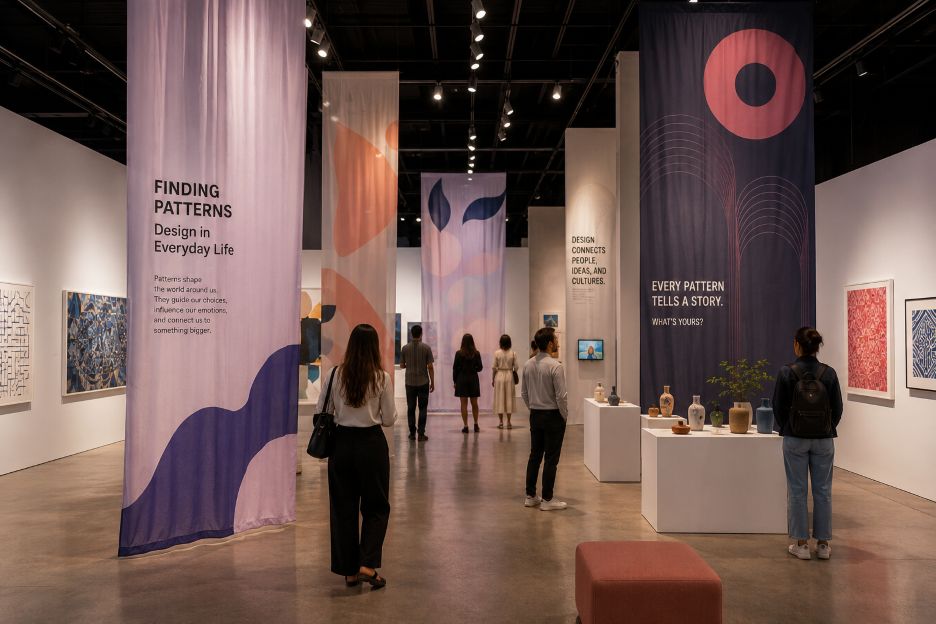
Temporary Visual Installations and the Power of First Impressions
People often form impressions of a space within seconds of entering it. Before visitors examine individual artworks, they respond to environmental signals. Light levels, colors, textures, and scale quietly create expectations.
The Museum of Modern Art has discussed how exhibition design contributes to interpretation by providing context around artistic works. A carefully designed environment can guide visitors toward a particular mood without directly telling them what to think.
Imagine entering a gallery where soft hanging fabrics divide open areas into smaller pathways. A visitor may instinctively slow down and move through the space differently compared to entering a room with blank walls and direct sightlines. Temporary visual structures often function as silent guides. They shape movement and attention while remaining part of the background.
These design choices matter because visitor experiences involve more than viewing objects. Art spaces increasingly aim to create environments that feel immersive rather than static.
When Flexible Design Supports Storytelling
Many exhibitions tell stories rather than display isolated works. Temporary materials can help connect individual pieces into a larger narrative experience.
Community art spaces provide a useful example. Unlike permanent museums, these environments often change themes regularly. A gallery may host photography one month and local sculpture the next. Permanent construction for every transition would require significant resources and time.
Research published by The American Alliance of Museums suggests that adaptable exhibition methods can help institutions respond to changing audience interests and programming needs. Flexibility allows spaces to evolve while preserving practical efficiency.
Large hanging textiles, movable panels, and printed visual displays often serve as tools that help define themes across rooms. Instead of rebuilding walls, organizers can adjust visual elements to establish continuity between separate works.
Visitors may not consciously notice these additions, yet they frequently remember the overall feeling of the environment afterward. Memory often blends artwork and surrounding atmosphere together.
Questions About Whether Temporary Elements Compete With Art
Despite their usefulness, temporary installations create an ongoing discussion within the design and art communities.
Some critics argue that environmental design occasionally becomes too dominant. Attention can shift toward visually dramatic surroundings instead of the work itself.
Social media may contribute to this challenge. Visitors increasingly photograph spaces designed for visual impact. Research from Pew Research Center has shown how digital sharing behaviors influence the way people interact with public spaces and experiences. In some environments, visitors may focus more on creating photographs than engaging deeply with the artwork.
As a result, exhibition planners often face a balancing act. Strong visuals can increase engagement, yet excessive visual layering can distract audiences.
Traditional gallery designs followed a different philosophy. White walls and minimal surroundings attempted to remove outside influence. The goal was simple, place attention entirely on the artwork.
Temporary installations introduce another perspective. They suggest that context itself can become part of the experience.
Finding Balance Between Permanence and Flexibility
The discussion does not necessarily require choosing one approach over another. Art spaces can preserve a stable identity while introducing flexible design layers when appropriate.
Many contemporary institutions already use this balanced model. Architectural elements remain consistent while visual additions evolve around changing themes and audiences. Discussions around museum preservation and conservation practices also highlight an important consideration within exhibition design. Galleries frequently balance flexibility with the responsibility of protecting collections, maintaining environmental stability, and preserving the long-term identity of a space.
Experts from Smithsonian Institution Exhibition Services note that visitor-centered design increasingly focuses on accessibility, movement patterns, and emotional engagement. Temporary display systems often support these goals because they can adapt without large structural changes.
Flexible visual tools can also serve practical purposes beyond appearance. Wayfinding systems help visitors navigate spaces. Large printed textiles can separate areas while maintaining openness. Modular visual backdrops may establish focal points during temporary exhibitions or public events.
The purpose is rarely decoration alone. Effective design quietly supports interaction.
Art Spaces as Living Environments
Art environments continue changing because audience expectations continue changing as well. Visitors increasingly seek experiences that feel connected, memorable, and immersive.
Temporary visual installations reflect this shift. They create room for experimentation while allowing spaces to adapt over time. Large-format textile displays, hanging visual systems, and adaptable exhibition graphics have become practical tools for shaping atmosphere without permanent alteration.
Perhaps the most effective exhibition environments are those where people hardly notice the design choices at all. Visitors simply move through the space naturally, engage with the artwork, and leave with a lasting impression. Flexible display materials and temporary presentation systems quietly support that process by helping spaces evolve while preserving the purpose of the art itself.
As galleries, pop-up exhibitions, and community art spaces continue exploring adaptable design strategies, temporary visual elements may remain part of the conversation. The challenge is finding a balance where changing visual environments enrich experiences while allowing the artwork itself to remain at the center.